

“My phone keeps trying to send me targeted shopping ads based on my search history. Joke’s on the algorithm—I’m going to the shops specifically to buy things that I don’t need, with money I shouldn’t spend, just to feel alive.” Anon
Despite an increasingly technology-pervasive world and AI looming large, there remains a very basic human instinct which is for social interaction or a real experience. This continues to affect how we use commercial property across all sectors, in particular – retail and specifically retail warehousing.
Set aside the positives of in-store shopping for retailers such as reduced rate of returns and improved brand awareness but seeing, touching and feeling goods increases the likelihood of a purchase. Have you ever gone to Lidl for a pint of milk and left with a kayak or a basket full of beauty products and an inflatable swimming pool?!
While there is no denying that the more general retailing backdrop remains challenging, the out-of-town market looks well placed to navigate the choppy waters. The sector’s tenant demand is increasingly concentrated in those categories that remain relatively well-positioned: value, convenience, discount food, trade-led retail and essential spend. This kind of positive occupational story is giving investors comfort and the sector remains one with the deepest pool of active buyers.
With this backdrop, in addition to our regular market analysis, our focus in this review will be on the retail warehousing sector. What is driving occupier demand, what will rental growth look like in the short to medium term and what factors are key when Investment Committees are making final decisions. To help shape our thinking, we are pleased to share views from Gavin Munn, Senior Director at Edmond de Rothschild Real Estate Investment Management, who have been active in the sector across the UK.
PS – What does AI think is a joke? Humans.

Market Overview.
Key Themes
Aberdeen activity – whether Prime Minister Burnham’s “pragmatic approach” to the North Sea will translate into renewed offshore activity remains to be seen but appetite remains for modern product let to strong covenants on longer leases with more concessionary yields.
Major logistics speculative funding – the funding of the Newlands Developments 350,000 ft logistics scheme at Eurocentral is a shot in the arm for the sector, showing real belief in the occupational letting story for larger warehousing in the central belt.
Gilt rates rising – as inflation rises and markets remain uncertain over the direction of economic policy, the rise in Government Gilts does nothing to help with the cost of debt and an anticipation that this may well rise in the short to medium term.
Prime Edinburgh offices – having not had a prime building come to the market for a number of years, the prospect of several prime sales being launched in the final quarter should give a good benchmark for appetite and pricing in the sector. Early signs are that they will be well received.
Fund activity – in addition to the well-publicised emergence of the LGPS buyers, a number of the more established institutional investors are coming back to the fore for larger (prime) assets, specifically retail warehousing but also other sectors including logistics and Edinburgh offices.
Size matters – the sale of Hillington Industrial Park in Glasgow for c£145m has attracted a good depth of interest from a range of overseas buyers, most with UK based asset management teams. Further confirmation that there remains good appetite for assets of scale where the owner can create their own internal market and work through realistic business plans.
Transaction Volumes
Q3 saw £348m traded down 21% on Q3 2025
Q3 volumes were 11% below the 5-year average
Running investment volume for 2026 totals £1.07bn
No Data Found
Our View
-
Buyers continue to focus on assets where underlying occupational fundamentals provide a clear route to rental growth. Limited supply of good-quality stock is supporting pricing across a number of sectors, with industrial and logistics remaining a particular area of focus. Rental growth is now tangible, while constrained availability continues to underpin occupier demand. The shortage of modern accommodation, coupled with limited new development, is providing increasing confidence in the sustainability of rental growth and supporting investor appetite for well-located assets with strong underlying fundamentals.
The office market continues to demonstrate a clear divergence between high-quality, well-located stock and secondary accommodation. Edinburgh remains particularly compelling, with Grade A availability tight and prime rents approaching £50 psf, supported by a limited development pipeline. Glasgow is also showing encouraging signs of improvement, with take-up strengthening while the availability of Grade A space remains constrained.
While the Bank of England base rate has fallen steadily from the post-pandemic peak of 5.25% and has remained at 3.75% since December 2025, expectations are now for rates to begin increasing again in the coming months amid rising inflation. At the time of writing, 10-year UK government gilt yields stand at 5.41%, compared with 4.76% in 2025 and their highest level since the Global Financial Crisis. Against this backdrop, commercial property investors are increasingly focused on income security and demonstrable rental growth as key drivers of demand and pricing.
Going into Q4, we expect activity to continue to be driven primarily by logistics and retail warehousing platform builders, SCPI investors and private investors/family offices. While there appears to be selective institutional appetite, the limited availability of core opportunities and lack of suitable scale is likely to continue to constrain overall activity.
Key Recent Transactions.
Q2 saw some interesting themes and significant transactions which we have highlighted below:
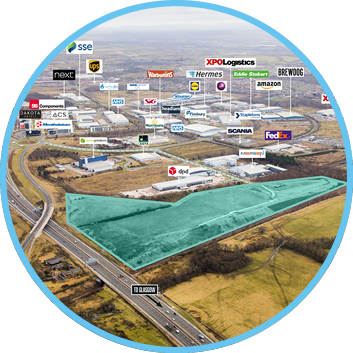
Orchard Park, Eurocentral
“US REIT funds prime logistics site”
Vendor: Newlands Developments
Funder: Realty Income
Price: £72m
Date: September 2026
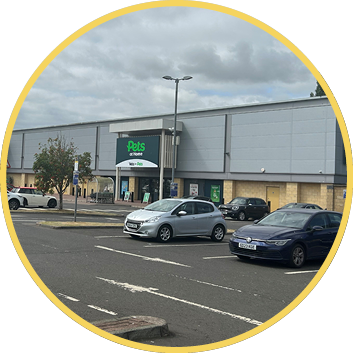
St Catherine’s Retail Park, Perth
“SCPI acquires off market retail park”
Vendor: Moorgarth c/o Argo Real Estate
Purchaser: Epsicap REIM
Let to: B&M, Wickes & Pets at Home
Price/Yield: £10.475m / 7.25%
Date: August 2026

Morrisons Distribution Centre, Bellshill
“Investor acquires regional distribution centre”
Vendor: ICG
Purchaser: Blacksand
Let to: Morrisons
Price/Yield: c. £45m / c. 6.5%
Date: August 2026
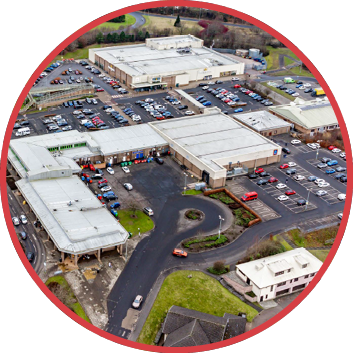
Bridgewater Shopping Centre, Erskine
“Grocery anchored shopping centre trades”
Vendor: Broadland Properties
Purchaser: Greenridge Investment Management
Anchored by: Morrisons and Aldi
Price/Yield: £21m / c. 8.2%
Date: September 2026
The investor view on the retail warehousing sector
Which occupier category currently provides the strongest platform for retail warehousing performance?
No Data Found
The results show a clear preference for foodstore operators, with 62% of respondents identifying the category as the strongest platform for retail warehousing performance. This was more than double the next placed category, with 24% selecting discount/value retailers and a further 14% opting for drive-thru/F&B operators.
The results vary by investor type. 75% of Prop Co respondents selected foodstores, compared with 56% of Funds. Funds showed a greater preference for discount/value retailers, with 33% selecting the category. Investment Managers were more supportive of drive-thru/F&B, with 33% identifying the category compared with 12-14% across the other investor groups.
What will be the key driver of retail warehousing rental growth over the next three years?
No Data Found
Limited supply was identified as the clear leading driver of rental growth, with 47% of respondents selecting it as the most important factor. This was followed by asset management at 23% and convenience-led consumer spending at 20%, highlighting a combination of supply constraints, active ownership and underlying occupier demand as the key themes for rental growth.
The split by investor type is particularly notable. 78% of Funds identified limited supply as the key driver, compared with 13% of Prop Co respondents. Prop Cos instead placed greater emphasis on convenience-led consumer spending, with 50% selecting this as the primary driver. Investment Managers took a more balanced view, with 36% identifying asset management as the key source of rental growth – the highest proportion of any investor group.
What characteristic is most important when assessing a retail warehousing acquisition today?
No Data Found
The responses highlight the importance of both location and the opportunity to create additional value. 34% of respondents selected dominant catchment strength as the most important acquisition characteristic, closely followed by 28% selecting asset management opportunities. A further 21% identified reversionary rental potential, with 7% selecting strong anchor tenant covenant.
The investor split again reveals different approaches. 50% of Prop Co respondents identified asset management opportunities as the most important characteristic, compared with 11% of Funds and 27% of Investment Managers. Funds placed greater emphasis on location, with 44% selecting dominant catchment strength, while 36% of Investment Managers also identified catchment as their primary consideration.
“Expert view” on the retail warehousing sector…

Gavin Munn
Senior Director
Edmond de Rothschild REIM
What do you see as the key drivers of investor demand for retail warehousing today?
As with many other investors we have strong conviction about the retail warehouse sector. It offers sustainable income, good rental growth prospects and attractive returns relative to other sectors.
From our perspective, the primary driver is really the depth of occupational demand. Vacancy levels are very low, demand is pretty broad and supply in many locations is now really tight. There has been very limited development and the sector has gone through a period of restructuring post COVID, which has left the more robust retailers. Rents have also largely been rebased, so for the most part you are working off rents that are affordable. All of that gives the sector some very good fundamentals.
Demand is spread across a number of robust sub-sectors, including discount and value retail, food, DIY, furniture and pets however we are not necessarily focused on one over another. For us, it is really about occupational demand within specific micro-markets and understanding why that retailer needs to be in that location.
We certainly favour the sorts of retailers that the internet cannot really replace. Take furniture as an example. People still want to go to a showroom, see the product and physically sit on a sofa before buying it. It is an omnichannel model, where people can buy online or in store, but the physical store still plays an important part in the process.
Another consideration is that retail warehousing tends to be in relatively strategic, well-connected locations that lend themselves to alternative uses over the longer term and is another factor when selecting the right opportunities.
With supply constrained and vacancy at historic lows, how sustainable is the rental growth story?
As a generality, the rental growth story is pretty good, but I think, like all sectors, it is increasingly asset and location specific. It does not necessarily mean all retail warehouses will see the same rental growth potential.
For us, it is about focusing on supply-constrained micro-markets. It is also about affordability over time, particularly important with more index linked leases.
As an example we recently acquired a DFS & Sofology investment in Swindon. The tenant had been there for around 30 years, and had rebased their rent in what we knew was a very profitable store. There was a break in the lease however the tenant had signed up to a two-year rent penalty it. Projected rental levels and store profitability gave us comfort to underwrite the break risk.
How important are foodstore and convenience-led occupiers in supporting retail warehousing performance?
We think foodstores are important, but they are by no means essential to a successful retail warehouse investment.
There are clearly benefits if you are buying a retail warehouse with a foodstore on or adjacent – you have the frequency of visits, relatively defensive spending and the cross-pollination between the foodstore and the other retailers.
But what is more important to us is: is there a sustainable reason for customers to visit that particular location and that particular store?
Is it a use that is difficult to replicate online? DIY is an obvious example. If somebody needs something they are more often than not going to want it immediately rather than wait for it to arrive in the post. There is a sustainable reason for that customer to visit the store.
So, a supermarket next door certainly cannot be a bad thing, and it can strengthen a location, but it is not critical from our perspective.
It comes back to understanding the underlying reason customers are visiting the location.
Will future development be driven by extensions of existing schemes rather than new retail parks?
I think that is an easy yes, for the most part. Planning, land availability and the cost of construction make development extremely difficult.
So, extensions, subdivisions and reconfigurations of existing schemes are probably going to account for most development in the near future.
Where we do see new development, it may be more in the form of smaller, convenience-led schemes. You can also see those working in smaller locations where there will be a relatively small immediate population but a much wider catchment because there is limited competing provision.
We often model on a ten-year hold and it is difficult to predict that far. Development economics could be very different and the potential for redevelopment could be a consideration for the next purchaser.
Therefore, site configuration and developability are still things we focus on, even when looking at long-income opportunities. Ideally, you want to buy something that works as an investment today but also ticks that box in terms of having wider potential over the longer term.
Which occupier categories are likely to drive the greatest demand for space over the next five years?
Demand is relatively broad at the moment and I think we would expect it to remain that way. Discount and value should continue to be important because there does not seem to be any lessening of customers’ appetite for value. Food and convenience operators such as Aldi are also continuing to look for representation and expansion opportunities.
It may not necessarily be about new stores, but rather about protecting market share. Our experience is that some retailers will protect their position fairly aggressively and actively seek renewals or extensions of their leases far from expiry. That is particularly relevant in Scotland, where retailers do not have the same security of tenure. With very limited new stock being built, losing a good location can mean losing market share without a re-site option.
Retail warehouses are now becoming quasi-distribution warehouses in a way. You have the public coming through the front door, but occupiers are also effectively selling out of the back door through click-and-collect. They can act as a fulfilment centre as well as a traditional retail store, which makes them increasingly useful to an omnichannel retailer.
Ultimately, though, our approach is “buy the asset, not the sector.” We have conviction about retail warehousing, but like any sector it is evidence-led and selective. It is about buying the right asset and tenant in the right location, with the right demographics, the right level of rent and ideally a site with flexible options.