

The famous story goes that George Best was once playing in North America in the late 1970s. When asked why he made the move across the Atlantic, he replied:
“I saw an advert on the side of a London bus inviting me to Drink Canada Dry, so I thought I’d give it a shot.”
The Tartan Army have drunk Boston and Miami dry, helping to ease the pain of several lacklustre performances on the pitch – it wasn’t even glorious failure this time…
The last time Scotland were in the World Cup (June 1998), Tony Blair had just started a 10-year stint as Prime Minister, the economy was growing steadily, retail rents were growing faster than industrial rents, the base rate was at 7.5% and the investment market was in reasonable shape. Fast forward to June 2026, it looks like Andy Burnham will be our 7th PM in 10 years, industrial rental growth has been the standout performer for best part of a decade, the base rate now sits at 3.75% and yet the investment market remains sticky.
A dearth of core product on the market has suppressed Q2 volumes, yet there remains a good level of investor appetite. UK Fund activity is relatively sporadic, allowing for private (equity) buyers to see the opportunity but the traditional debt backed buyers continue to ride the roller-coaster of a fluctuating debt market. This period of volatility seems set to continue, making the underwrite for core plus assets more challenging.
With this backdrop, in addition to our regular market analysis, our focus in this review will be on trying to make sense of the current debt market, which sectors will fare best, how might pricing change and is there opportunity looming for those well capitalised/canny investors. To help shape our thinking, we are pleased to share views from a mainstream high street lender – David Rennie of RBS and from a non-bank lender – Andrew Smith from Unbranded Capital who will give us a real insight into what is happening in the debt markets and how this may play out in the short to medium term.
Perhaps a bit like being a Scotland football fan, it is the hope that kills you.

Market Overview.
Key Themes
Andy Burnham the solution? – Assuming he is successful, hopefully it is 7th time lucky! Surely someone needs to realise that if “growth” is the priority then incentivising workers and employers is key, along with some stability and a clear plan on how the public and private sector can work together on major mixed use development projects (currently unviable).
Market it and they will come – setting aside the outside noise, there remains real appetite for prime assets that are properly priced, particularly logistics. It can be difficult advice to accept but scarcity value can add significantly to a marketing campaign..
Private investors see the opportunity – several of our recent sales have been dominated by private investors (not reliant on debt) who, perhaps not as hamstrung by IRR returns but see the chance of securing, fundamentally, high quality assets at a time when others have their eye off the ball.
Retail warehousing and logistics – are two sectors where development remains economically viable. Recent retail warehousing examples of the extension at Ford Kinnaird in Edinburgh, Dunbar Retail Park and logistics at Eurocentral Gateway are good examples of where development activity is likely to be focused in the near term.
Debt availability – while most traditional lenders remain open for business on conservative terms, it does not feel that terms will improve in the short term (if anything they will harden), hence those debt-backed buyers are having to adjust their return criteria to reflect more conservative conditions.
PBSA activity – the sale of the DWS portfolio to Vita which included 2 prime assets in Glasgow and Edinburgh shows that while the sector has some challenges, for the right product there remains real appetite, a sentiment that is shared across most of the mainstream sectors.
Transaction Volumes
Q2 saw £358m traded up 21% on Q2 2025
Q2 volumes were 7% below the 5 year average
Hotel and PBSA accounted for 67% of the Q2 volume
No Data Found
Our View
When transaction volumes dip, identifying clear trends of market activity can be challenging. However, reduced deal flow often serves to highlight the sectors and asset types that continue to attract strong investor interest and, in some cases, highly competitive bidding. Within the logistics sector, assets offering robust rental reversion, supported by strong open market evidence, or those benefiting from guaranteed income growth through fixed rental uplifts or index-linked reviews, have remained particularly sought after. A recent example is the sale of a logistics unit in Cambuslang let to Scottish Power, which attracted significant interest from a broad range of buyers, including property companies and private family investors. The asset transacted at a yield of below 4.75%, with the anticipated rental reversion expected to drive the yield in excess of 7% later this year. We expect these investor demand for similar opportunities to remain strong over the coming months.
Whilst the quarter has been characterised by relatively limited transactions and, with a few exceptions smaller lot sizes, there are plenty of opportunities for vendors looking to capitalise on more captive buyer pools. We estimate that there is well in excess of £200m of deals currently under offer and while the onset of the summer holiday period may delay completion of some of these transactions until late Q3 or early Q4, the volume of deals progressing through the market provides encouraging evidence of underlying investor appetite for the right stock.
What do we think looks compelling :
Edinburgh offices – the occupational story continues to be strong, with rental growth taking city centre Grade A space to just under £50 psf. Recent core plus sales have attracted a good depth of competition.
High street retail – the top pitches in Edinburgh and Glasgow, where retailers are competing for the best units is resulting in strong rental growth coming through with yields in the region of 7% with reversion looking interesting.
Key Recent Transactions.
Q2 saw some interesting themes and significant transactions which we have highlighted below:

55 Fullarton Drive, Cambuslang
“Reversionary logistics unit snapped up”
Purchaser: Cable Properties & Investments
Let to: SP Distribution Plc
Price/Yield: £10.85m / 4.67%
Date: May 2026

81/85 George Street, Edinburgh
“Private investor prime Edinburgh mixed-use asset”
Purchaser: Private investor
Let to: Virgin Money, Phase Eight, Intergen, AAB
Price/Yield: £20.19m / 7.63%
Date: May 2026
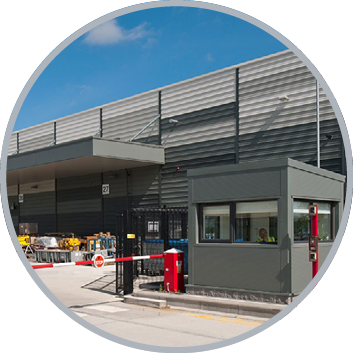
BP, D2 Business Park, Aberdeen
“Modern high spec logistics facility sold”
Purchaser: US REIT
Let to: BP Exploration Operating Company Limited
Price: c£19.5m
Date: June 2026

Straiton Retail Park, Edinburgh
“Investment manager acquires Edinburgh retail warehousing”
Purchaser: Hines
Let to: Home Bargains, Dunelm, Food Warehouse, TK Maxx etc
Price/Yield: c£20m / c7%
Date: June 2026
The investor view on the debt market
What best describes your current acquisition stance?
No Data Found
The survey results which are identical across the various investor classes, indicate a notably positive investment outlook, with 71% of respondents actively pursuing acquisition opportunities. This suggests that, despite ongoing macroeconomic uncertainty and a relatively subdued transactional environment, the majority of investors remain committed to deploying capital and are identifying opportunities that meet their return requirements.
A further 12% of respondents are adopting a more cautious approach, choosing to monitor market conditions before committing to acquisitions later in 2026. This cohort is likely seeking greater clarity around interest rates, occupational market performance and pricing trends, but importantly remains engaged with the market.
Only 18% of respondents indicated that their primary focus is on managing or repositioning existing assets rather than pursuing new acquisitions. This reflects an emphasis on extracting value from current holdings, as investors position themselves for the next phase of the cycle.
Have values reached a stage where debt has now become accretive?
No Data Found
The results suggest that investors continue to take a highly selective view on the use of leverage in the current market. With 65% of respondents indicating that debt is accretive on an asset-specific basis, there is a clear recognition that financing can enhance returns, but only where pricing, income growth prospects and financing terms align appropriately.
Only 12% of respondents believe values have adjusted sufficiently for debt to be broadly accretive across the market. This relatively low proportion reflects the ongoing challenge of achieving positive leverage in sectors where the occupational and rental growth assumptions are less certain. Meanwhile, 24% of respondents do not believe values have yet reached a level at which debt can consistently enhance returns.
How do you expect office pricing to move over the next 12 months?
No Data Found
The results indicate a broadly neutral outlook for credit conditions is anticipated over the next 12 months, with sentiment split across respondents. While 38% anticipate an improvement in lending conditions, a slightly higher proportion (44%) expect conditions to remain broadly unchanged, suggesting a view that any easing in financing constraints will be gradual rather than immediate.
A smaller cohort of 18% expect credit conditions to deteriorate over the period. This minority view may reflect concerns around macroeconomic uncertainty, lender caution, or continued selectivity in underwriting, particularly for assets with shorter income duration or weaker covenant profiles.
Overall, the findings point to a market in which credit availability is stabilising but not yet materially loosening. Lenders are likely to remain disciplined, with incremental improvements in pricing and liquidity expected to be uneven and closely tied to asset quality, sector fundamentals and sponsor strength.
“Expert view” on the debt market…

Andrew Smith
Founding Partner, Unbranded Capital
How do you differentiate yourself from the mainstream lenders market?
We tend to differentiate ourselves by focusing on situations where certainty, speed and flexibility are more important than a standardised credit process. We are a team of property professionals each with over 20 years of experience of direct property investment and development. We therefore have considerable in-house expertise which allows us to underwrite and execute transactions extremely efficiently. We also lend our own shareholder capital, which allows us to be very nimble in our decision making.
Mainstream lenders remain very important to the market, but they are often constrained by policy, concentration limits, sector appetite, internal valuation requirements and committee timetables. As a non-bank lender, we are able to look more closely at the specific facts of a transaction: the asset, the borrower’s position, the exit route, the security package and the commercial rationale for the loan.
Our strongest area is typically bridging and special situations, where there may be a timing issue, a refinance requirement, an asset management plan, a planning angle, a broken sale process, a maturity event, or simply a need for a lender who can engage quickly with a more complex set of circumstances. We are not trying to replace mainstream finance; we are usually most relevant where mainstream finance is either unavailable, too slow, or not yet appropriate for the borrower’s position.
Generally what sort of equity return are you seeking?
We are primarily a lender rather than an equity investor (although we would say we act more like an equity partner than a lender), so we tend to think first in terms of risk-adjusted debt returns rather than conventional equity returns. That said, the return requirement is always driven by the risk, leverage, liquidity, asset quality, complexity and strength of the exit.
For lower-risk, well-secured bridging opportunities with clear exits, pricing can be more competitive. Where the situation is more complex — for example where there is execution risk, a challenged refinancing, a distressed or time-sensitive element, or a heavier asset management component — the required return naturally needs to reflect that additional risk.
The key point is that we are not looking for theoretical upside at the expense of downside protection. We are focused on transactions where the risk is properly understood, the security position is robust, and the return is proportionate to the complexity of the situation.
We would describe ourselves as an “early to mid-teens” returns (%) business (including interest rate and fees).
Development finance is generally difficult at the moment, do you see this as an area of opportunity?
Development finance is certainly difficult at the moment, and we would be cautious about describing it as a broad opportunity. The combination of build cost uncertainty, planning delays, slower sales rates, viability pressure, funding cost and valuation sensitivity has made the sector much harder to underwrite. There are many specialist development lenders out there, but they come at a price, which adds to the pressure on viability.
We are less active in ground-up development finance than in bridging and special situations. That is a deliberate choice. In the current market, development risk can be difficult to price unless the fundamentals are particularly strong: experienced sponsor, sensible leverage, realistic cost plan, clear demand, strong professional team and credible contingency.
There may be selective opportunities, particularly where a scheme is substantially de-risked, close to completion, well located, or where our capital is being used to solve a specific short-term issue rather than fund the entire development risk. But as a general theme, we see more attractive risk-adjusted opportunities in transitional assets, refinancing situations, bridging loans and special situations than in conventional development finance.
Ultimately our feeling is that land and existing buildings value expectations need to reduce in order to increase the viability and therefore deliverability of projects.
In the next 12 months do you see credit conditions improving?
We would expect credit conditions to improve gradually rather than dramatically. The market has already adjusted to a higher-rate environment, but lenders remain selective and borrowers are still dealing with the consequences of higher finance costs, lower liquidity in some investment markets and more cautious valuations.
If interest rates continue to stabilise or move lower, that should help sentiment and improve refinancing options. However, we do not expect a wholesale return to the very loose credit conditions seen in previous cycles. Mainstream lenders are likely to remain disciplined, particularly around leverage, interest cover, asset quality and sponsor strength.
For non-bank lenders, that creates a continued role. Borrowers may still need flexible capital to bridge timing gaps, refinance existing debt, unlock sales, complete asset management plans or deal with more complex situations. So while conditions may improve, we think the market will remain selective, and the best opportunities will be in transactions where there is a clear plan, strong security and a realistic exit.

David Rennie
Relationship Director,
The Royal Bank of Scotland (RBS)
What sectors are currently getting most support at credit committee?
We are seeing activity across all sectors at the moment however the sector that is most in favour at the moment is Industrial, both newly developed and refurbished assets particularly logistics and warehousing. This is driven by a lack of high quality supply and significant demand from occupiers. Rents continue to improve, helping existing investors and development appraisals.
What factors do borrowers need to demonstrate to give lenders confidence when assessing lending against assets?
Traditional factors of ability to service debt, security cover and strength, diversity and length of tenant profile remain as important as ever. In addition a management team with a track record of delivering through the cycle and for individual proposals, evidence that significant detailed analysis has been undertaken around areas such as design, market, tenant profile before seeking funding. That said, we are happy to work with management teams to refine their proposals during funding discussions.
Given the current wider geo-political uncertainty is it having any meaningful effect on appetite or pricing?
The major impact on pricing has been to the market funding rates such as SONIA or Base rate where expectations have shifted from rate cuts in 2026/27 to flat or even rising rates, impacting on the overall pricing package for borrowers. The uncertainty has also created volatility in the interest rate market making hedging decisions more difficult. Appetite is impacted on individual transactions where inflation has increased the costs of materials without any improvement in rent achievable which impacts project viability and in turn risk profile.
In the next 12 months do you see credit conditions improving?
Yes, as long as the situation in the Middle East continues to improve. Whilst headwinds remain, the mood was positive in January/February 2026 and many projects were paused in March as management teams decided to wait and see so I expect this positive sentiment to return towards the end of 2026 and in to 2027.