

Einstein dies and goes to heaven. First person he sees he asks, “Excuse me, what’s your IQ?” The person replies, 280. Einstein says, “Great, we can talk about astrophysics!”
2nd person he runs into he asks the same question, “what’s your IQ?” The person replies, “150”. “Great!” says Einstein, “we can talk about events of the day!”
3rd person he sees he once again asks about their IQ. This time the person says “45!” Einstein says, “Great, where do you think the real estate market is headed?!”
If you don’t laugh, you might cry – trying to make sense of how the latest geopolitical events will play out has (again) made calling the market a challenge.
The start of 2026 has seen stability returning and while the amount of available stock on the market remains muted, confidence has been improving. The bigger picture challenges will play out and if some sort of reasonably swift outcome can be achieved, then hopefully the early momentum will continue. A protracted conflict will not be helpful.
Across the sectors, good buyer depth remains for quality industrial, retail warehousing and high street retail, while PBSA appetite is becoming focused on assets with “value” rents and a cluster bias. The office sector is also seeing improving levels of interest. A lack of any meaningful new development in the strongest markets, attractive entry yields and the prospect of rental growth is making the investment rationale more compelling.
With this backdrop, in addition to our wider market analysis, our focus this review will be looking at the office sector. How liquid is the market, what type of product is most attractive (dry long leased/core plus or value-add) and how pricing might move in the short to medium term. To help form our view, we are pleased to include a guest contribution from Jacob Thompson, Senior Investment Manager at Union Investment Real Estate.
Control the controllables is a common phrase used at a time of uncertainty but, perhaps even more relevant, we are aiming to “keep calm and carry on…”

Market Overview.
Key Themes
Cost of debt volatility – with Swap rates seemingly reacting to every new post from President Trump, securing attractive debt terms in the short term has become more difficult. Lenders are finding it a challenge being able to fix a proposal during such volatility.
Edinburgh office market resilience – the sale of Waverleygate and Exchange Plaza (both significant core plus opportunities) in this quarter shows that investors believe in the rental growth story in the city and after a quiet 2025, the letting market is showing marked signs of improvement in early 2026.
Continued Fund evolution/consolidation – on top of the emergence of hybrid Fund models (direct property holdings plus global REIT shares), there has been a flurry of retail fund consolidation including, L&G with Federated Hermes, Columbia Threadneedle with Nuveen and most recently Columbia Threadneedle with Patrizia. Scale is being sought and with the merged Local Authority Pension schemes, the amount of active “core” capital is increasing.
Logistics rental growth remains compelling – recent sales have shown that there remains a lot of conviction in the logistics sector where, if the location/product is strong enough, investors are happy to live with net initial yields in the 4%-5% range in anticipation of significant rental growth coming through reviews or lease expiries, ideally within a 2-3 year period.
PBSA focus on value – as the effects of rising cost of living and rental affordability come into sharp focus, investors are shifting their attention from high-end studio heavy schemes to the value end of the spectrum – cluster-led, not reliant on overseas students and working off affordable rents, where sensible growth assumptions are more realistic.
Lack of quality stock – there continues to be limited prime stock openly available across the sectors. Not a scientific approach to investment advice but anything of quality that is brought to the market is getting good traction and achieving strong pricing.
Transaction Volumes
-
Q1 saw £365m traded, up 81% on Q1 2025.
-
Q1 volumes were 6% below the 5 year average.
-
Q1 average lot size was £11m.
No Data Found
Our View
- The year began with renewed optimism and expectation of increased deal activity. While headwinds have proven slightly stronger than anticipated, there remain active pockets of the market, particularly in the £5m–£15m range, where property companies and private investors, including family offices, continue to pursue attractive opportunities. French SCPIs have also remained active on the acquisition front, typically targeting smaller lot sizes, albeit with a few notable exceptions. We expect this trend to continue in the coming quarters, supported by ongoing capital inflows into these SCPIs.
- The office sector continues to lead transaction volumes, with approximately £150m of deals completed in Q1. Both Glasgow and Edinburgh have attracted a broad range of investors, including several new entrants to the market. In Edinburgh, strong rental growth forecasts—driven by constrained supply—are underpinning a compelling investment case. Meanwhile, Glasgow appears to have stabilised, with several recent transactions completing, including George House, The Bond, and McLellan Works. Looking ahead, we anticipate a number of core office assets may be brought to market in the coming months, proving an opportunity to assess depth of the market and whether pricing aspirations align.
- While the full impact of the conflict in the Middle East on the commercial property market remains uncertain, forecasts of two to three interest rate cuts this year appear to have shifted, with 10-year UK gilts reaching their highest level since 2008. That said, the market has become relatively accustomed to economic volatility, and a number of ongoing and recent transactions demonstrate that demand for high-quality assets remains robust across a range of investor groups.
Key Recent Transactions.
Q1 saw some interesting themes and significant transactions which we have highlighted below:
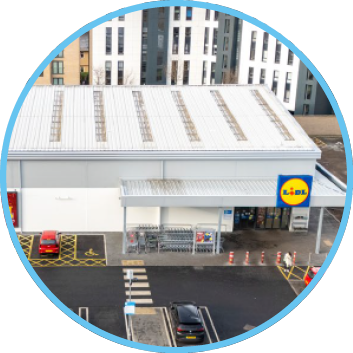
Lidl, Finnieston, Glasgow
“Long income supermarket with underlying residential value trades”
Vendor: The Ambassador Group
Purchaser: Watkin Jones
Let to: Lidl
Price/Yield: £8.03m / 5.0%
Date: January 2026

Hanover Buildings, Edinburgh
“Prime Edinburgh mixed‑use asset secured by local authority pension fund”
Vendor: Oval Real Estate
Purchaser: Lothian Pension Fund
Let to: Premier Inn, Lucy & Yak, William Hill, Cotswold etc
Price/Yield: £23.4m / 5.7%
Date: March 2026

Waverleygate, Edinburgh
“American investment manager sells core plus office”
Vendor: Kennedy Wilson
Purchaser: Melford Capital
Let to: Amazon, H&M, Royal London etc
Price/Yield: c£78m / c8.5%
Date: March 2026

Cuckoo Bridge Retail Park, Dumfries
“Fund snap up repositioned retail park”
Vendor: NewRiver
Purchaser: Aberdeen Investments
Let to: Sainsbury’s, B&M, Next etc
Price: £26.5m / 6.9%
Date: March 2026
The investor view on the office market
How would you characterise current liquidity in the Scottish office investment market?
No Data Found
Liquidity sentiment appears mixed, with responses across all investors split between 33% improving, 30% stable and 37% constrained, highlighting a market still in transition.
There are however clear differences by investor type. PropCos are notably more positive, with 60% seeing improving conditions, indicating strong appetite to transact. In contrast, Funds (44% constrained) and Investment Managers (42% constrained, 50% stable) remain more cautious, reflecting continued challenges around pricing and execution.
Overall, liquidity appears to be gradually returning, but selectively and largely dependent on individual strategy and risk appetite.
Where do you see the most attractive risk adjusted opportunities in the office sector?
No Data Found
Core-plus is clearly the preferred strategy, identified by 45% of all investors, reflecting its balance of secure income with identifiable asset‑management upside.
This is particularly evident among Funds, where 56% favour core-plus, and Investment Managers at 42%. PropCos show a slightly stronger tilt toward core (41%), although core-plus still accounts for 39% of responses. Private Equity takes a more barbell approach, split fairly evenly between core-plus (49%) and value-add (51%), highlighting a greater appetite for higher-return strategies. Meanwhile, value-add is also relatively prominent for Investment Managers (33%).
Overall, appetite is focused on mid‑risk strategies that offer clear opportunities to drive performance.
How do you expect office pricing to move over the next 12 months?
No Data Found
The majority of investors (58%) expect pricing to remain stable, pointing to a market that may be edging toward equilibrium. However, 33% anticipate pricing will harden, compared with just 9% expecting further softening, indicating improved sentiment and growing conviction that values in the office sector are past the bottom.
Private Equity is the most optimistic, with 73% expecting pricing to harden, while Investment Managers also lean positive (41% harden, 59% stable). PropCos are more mixed, with 40% expecting hardening but also 20% anticipating further softening. Funds are the most neutral, with 89% expecting stable pricing and limited movement in either direction.
Overall, expectations point to a market showing signs of steadiness, with cautious optimism for recovery.
“Expert view” on the office sector…

Jacob Thompson
Senior Investment Manager UK & Ireland,
Union Investment
Scottish Office Assets
G1 Building, George Square, Glasgow
Princes Exchange & New Uberior House, Edinburgh
What do you see as the most compelling aspects of the investment case for regional offices currently?
We have strong conviction in the regional office markets. There is a compelling rationale today to invest in best-in-class office assets, fundamentally driven by strong rental growth prospects and constrained supply. We are seeing this dynamic provide strong performance within our existing portfolio given the assets we own within core CBD locations in Birmingham, Manchester, Glasgow and Edinburgh
Since the peak of the previous market cycle, regional office prime yields have expanded and now demonstrate attractive spreads to both all in cost of debt as well as to central London sub-markets. In relative terms, today’s pricing looks favourable compared to long term yield averages which provides comfort to any underwrite.
That being said, the profile of asset which is defensive in location, offers real demonstrable reversionary potential, ticks all of the right ESG credentials and requires minimal short-term capex spend is scarce and such a profile of asset is often held by long term investors. This makes finding buying opportunities difficult and competitive.
To what extent has the improvement in the debt markets influenced your appetite for office investments?
The improvement in the debt markets from both a swap rate and margin perspective certainly has had a positive impact on our ability to underwrite office investments. Our funds are typically Euro denominated and we usually hedge all of the equity, therefore putting in place accretive finance is paramount for us in the UK to only be able to hit our returns but also to offset hedging costs, which can be costly with the ongoing global macro-economic environment.
Evidently since the outbreak of the Iran war swap rates have been increasing with the likelihood of returning inflation as well as potential base rate hikes. This is something that we as well as the majority of other core investors will keep an eye on as increasing medium term debt rates will have a clear impact on pricing and exit yield assumptions.
At a macro level, what impact are current global events having on your investment strategy?
As a global Real Estate Investment Manager with over €50bn in assets across the US, Europe and Asia-Pacific markets, we are always monitoring the evolving situation within current global events in relation to our funds, overall portfolio and the investment markets. Our strategy to invest in high quality, sustainable assets within prime locations will not change, however we are taking care to underwrite the potential impact or ramifications that may come about from these events. For example as previously mentioned on debt costs or the potential impact on cost and supply chains, should shipping be impacted for a longer duration of time. Gilt rates are also at the forefront of mind and the expectation that real estate fund returns will need to perform at a higher level if these rates continue to increase and then settle at a higher long term level.
What is your outlook for prime office yields over the next two to three years?
It’s hard to predict what may happen in the coming years given the high degree of global macro-economic uncertainty. However, one factor that will continue to support the argument for yield compression is occupier demand and rental growth. This is something that we continue to see as corporate occupiers continue to grow and modernise their footprints. Investors will pay for the right profile of product and will discount against those that have blemishes and that is why we will continue to see polarisation taking place. Development has been stifled for a number of years and in markets such as Edinburgh, the future supply story remains incredibly constrained. This provides further credence to the rental growth story and outlook for prime office yields given that the definition of prime may become narrower.
For the assets in your portfolio that are currently being repositioned, what are the key factors you are focusing on in the design?
The key focus of design will always be on producing high quality office accommodation which will hold broadest appeal to occupiers and drive the most value for our investors. Based on live projects we have within our portfolio, we are concentrating on providing outstanding office space which is future-proofed to serve the needs of the occupier, including excellent wellness, end-of-trip, terracing, arrival experiences and an all-encompassing ESG strategy. Flexibility, divisibility and a sophisticated M&E design also form an integral part of design.
Given the absence of new development, do you expect rental growth at the prime end to continue, and do you believe this will trickle down through the wider market?
A value proposition will always have a captive audience to some extent, however secondary or tertiary locations are unlikely to offer the resilience or defensive qualities that prime locations might. We have always typically targeted locations that can hold value throughout market cycles and we don’t expect to deviate from this strategy.