

“For three months, I can just enjoy myself. I’ve got a little bit of time. It’s going to be good and it’s going to be a good Christmas in the Clarke household, I promise you”.
Steve Clarke – Scotland Football Manager
Christmas came early in Scotland – qualification for the 2026 World Cup was a special gift and the manner of the victory against Denmark sent sales of Tennents Lager through the roof…
The investment market has not had quite the same buzz this year, but several larger deals have completed in the final quarter, which has made the year-end position look healthier and ahead of the 5-year average. However, headline figures can be deceptive. While completion of the bigger deals helps the overall picture, there remains a “stickiness” in the market, reflective of investors’ general caution when analysing new opportunities and no real distress to encourage forced selling. A further reduction in interest rates and an easing of SONIA will hopefully help to create a more fluid market as we move into the new year.
Across the sectors, there are pockets of depth in certain areas – namely retail warehousing and logistics but high street retail is catching up and whisper it, offices are starting to attract some more opportunistic buyers as the occupational markets improve.
With this backdrop, rather than looking back over 2025, our focus in this review (in addition to our usual market analysis) will be looking forward to 2026. Will it be a year of opportunity, what sectors will fare best and what will be the key drivers for creating a more liquid market. To help form our view, we are pleased to include contributions from a banker, fund manager and two active local property companies.
Footballers are probably too cool to sing these days but “We’re on the march with Stevie’s army” – Happy Christmas from the Lismore Team…

Market Overview.
Key Themes
Prime shopping centre activity – a small but very meaningful flurry of large deals (URW buying a 25% share in St James Quarter, Edinburgh; Frasers Group acquiring Braehead, Glasgow and Silverburn, Glasgow under offer to Land Securities). c£550m in total – highlighting that for the very best product in the sector, appetite remains resilient.
Rental growth still driving performance – yields across most sectors are generally stable with slight improvements in certain sub-sectors (retail warehousing, logistics and shopping centres), hence most investors are getting their required returns from rental growth. Again, not across all sectors, but with the development pipeline so constrained, rental growth in the best locations is prevalent and helping to support appraisals.
Princes Street comeback – prime high street retail continues to look attractive versus other asset classes, and we are starting to see this translate into more investment activity. Buchanan Street Glasgow was first to move, and this has been followed more recently by Princes Street in Edinburgh. Four deals are either complete or under offer making this year the most active in the last five. Private investors and local property companies are to the fore – the clever money getting in early!
Cost of debt improving (slowly) – the budget didn’t bring a lot of good news but one of the unintended consequences is that most economic forecasters are predicting a further reduction in base rates) perhaps 50 bps over the next 6 months. This won’t necessarily lead to an immediate reduction in the cost of debt but should help the direction of travel and improve confidence.
South African capital – a number of investors from SA have re-appeared after a period of inactivity. Generally focused on better quality assets with yields of 6%+, our perceived stability and transparent legal system are proving attractive.
Discount foodstores remain in vogue – the appetite for the best located long leased discount stores remains voracious. The sale of the Lidl in Finnieston, Glasgow at 5% NIY being a good example of how this sub-sector is the strongest of any in the market.
Transaction Volumes
Q4 saw £664m traded up 64% on Q4 2024
Q4 volumes were 40% above the 5 year average
At the time of writing, total investment volume for 2025 totals £1.601bn, up 4.5% on 2024
No Data Found
Key Recent Transactions.
Q2 saw some interesting themes and significant transactions which we have highlighted below:
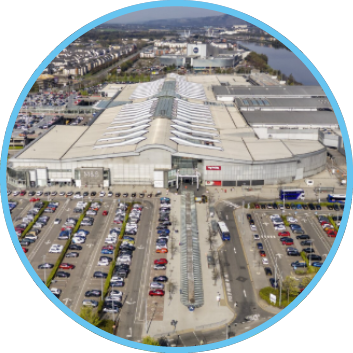
Braehead Shopping Centre, Glasgow
“Frasers Group adds to its rapidly growing portfolio”
Vendor: SGS Retail
Purchaser: Frasers Group
Let to: Next, Apple, M&S, Primark
Price/Yield: £220m / c8%
Date: November 2025

Total, Aberdeen
“French SCPI expands portfolio with Aberdeen industrial”
Vendor: Tritax Big Box
Purchaser: Alderan
Let to: Total Energies
Price/Yield: £28.55m / 8.1%
Date: October 2025

Uniqlo, Argyle Street, Glasgow
“Flagship shop snapped up”
Vendor: Praxis
Purchaser: Remake Asset Management
Let to: Uniqlo
Price: £9m / 7.12%
Date: December 2025

Henry Duncan House, Edinburgh
“Value add office acquired by SCPI”
Vendor: Sir Tom Hunter
Purchaser: Corum
Let to: TSB
Price: £19.2m / 7.20%
Date: November 2025
The investor view on the year ahead
Will 2026 be a year of opportunity?
No Data Found
This year’s survey results indicate that 86% of respondents maintain a positive outlook for the year ahead. While this represents a slight decrease from last year’s 88%, it nonetheless reflects a broadly optimistic sentiment across all investors.
Positivity was most pronounced among propcos (89%) and investment managers (91%), both of which continue to signal confidence in market conditions. Levels of optimism were more muted among funds (71%) and private equity investors (50%), suggesting a degree of caution within these groups.
Market sentiment throughout 2025 has been shaped by a disconnect between the strong optimism recorded last December and the more challenging economic reality that unfolded. Weak GDP figures and subdued growth momentum, combined with heightened uncertainty ahead of the November Budget, contributed to a marked slowdown in market activity. The Budget announcement from Chancellor Rachel Reeves, while anticipated, effectively placed deal-making and capital deployment on pause as investors waited for clarity on proposed measures.
With greater visibility now emerging around government policy, there is scope for market activity to regain momentum as we move toward 2026. A key potential tailwind is the expected easing of interest rates as inflation continues to recede as lower borrowing costs support enhanced liquidity.
What will the top three performing sectors be in 2026?
No Data Found
Retail warehousing (27%) and Living (25%) emerged as the most favoured sectors, broadly consistent with last year’s ranking, where Retail Warehousing accounted for 23% and Living for 27%.
Industrial, while still highly regarded, saw a modest decline in sentiment, falling from 27% last year to 23% this year. This slight shift may in part reflect portfolio rebalancing after a prolonged period in which industrial assets have dominated allocations. Nevertheless continued rental growth prospects and sector liquidity ensure that industrial remains a core focus for many investors.
Notably, both Offices (14%) and High Street Retail (11%) recorded a clear resurgence in confidence, rising from 9% and 6% respectively last year. For offices, limited new development – due to viability constraints – has sharpened investor interest in refurbishment and repositioning strategies.
High Street Retail’s improving outlook reflects the period of rental correction. Many units have now been rebased, bringing rents back to sustainable levels and prompting renewed investor attention in prime locations. Very low vacancy rates in these core pitches further reinforce attractiveness.
What three factors do you see as creating a more liquid market in 2026?
No Data Found
Confidence was identified as the most important driver, receiving 28%. This was closely followed by the stabilisation of debt terms (27%) and improving macro-economic conditions (23%). The near-even distribution across these three highlights the interconnected nature of sentiment, financing conditions, and the economic backdrop in shaping market activity.
These themes were broadly consistent across investor types, with confidence ranking first for nearly all groups. The exception was private equity investors, for whom debt terms and macro-economic conditions were more influential.
Confidence also led the responses last year, underlining the challenges the market has faced in achieving stability. Ongoing planning constraints, uncertainty surrounding UK policy, and global headwinds – including geopolitical conflicts, inflation pressure, and trade-related tensions – have all tempered transaction volumes.
Weight of money (15%) and pressure from lenders (7%) were cited less frequently but remain relevant secondary factors. The relatively low influence of lender pressure reflects the absence of widespread forced sales, contrasting notably with the post-GFC environment.
“Expert view” on the outlook for 2026…

Nick Peet
Divisional Managing Director,
Real Estate Finance, Santander
2026 – a year of opportunity?
Yes absolutely! The CRE sector in the UK has shown time and again that it retains many resilient features. The latest market headwinds certainly present different challenges to previous difficult cycles but the most skilled and energetic operators continue to find deals and thrive. I expected greater activity levels with regards to transactions in 2025 but now expect this overhang of pent-up demand and required seller activity to gather pace in the New Year. There has been a lot of readjustment with regard to rent levels/ lease profiles and wider tenant behaviours with a clearer picture now emerging of what is needed and where.
Sectors most likely to be in favour?
As a lender in a Corporate Bank with an open mind on all commercial property, I would hope to see opportunities from all CRE sub-sectors. That said, the sector that I would be delighted to see most renewed activity in would be development, especially Residential and Office. Hopefully, new models can emerge and deliver, which combine required public sector support and CRE nous to introduce a few more cranes across our towns and cities in an economic environment with less inflationary cost pressures.
What factors could create a more liquid market in 2026?
The biggest single feature will be a number of historic positions where there is a need to embrace a change. Whether driven by Sellers and Buyers price expectations becoming closer aligned or both junior and senior lenders having to firm up exits. I am also very hopeful that the CRE market will get a much-needed bounce of the ball with lower interest rates and some domestic economic stability, enabling greater levels of business confidence.

Philip Eaves
Divisional Managing Director,
Real Estate Finance, Santander
2026 – A year of opportunity?
Regardless of market conditions, there are always golden nuggets to be found. With sound advice (obviously!) and a bit of luck, these assets can deliver exceptional returns, and I expect the same to be true next year. We have seen rental growth across our industrial and retail portfolio, and for the right product, this trend should continue. Having completed several sales this year, we are now well-positioned to uncover new opportunities characterised by robust tenant demand and genuine rental growth potential.
Sectors in favour?
I am anticipating a strong year for prime Retail, a sector towards which we have significantly rebalanced our portfolio over the last five years. We have the freedom to invest in whatever part of the market appears most attractive, and we made this shift to acquire quality assets with rebased rents at sensible yields. MSCI returns now show Retail performing on par with—and in some sub-sectors outperforming—Industrial, and it is likely these two will remain the top performers in 2026.
While there is talk of the Office market bottoming out, the debate is nuanced. Overall, the sector seems to have stabilised—a positive sign—though I don’t see us increasing our exposure just yet. It remains an area to watch.
What factors could create a more liquid market in 2026?
Rental growth is key. If rents rise, money flows into the sector, and liquidity and price movements follow. Consequently, we need strong rental growth to drive liquidity.
A more competitive debt market would also be beneficial. Restricted access to debt has constrained parts of the market for several years, but this appears to be easing. This improvement, combined with a slight lowering of the base rate, should provide support. Given that thematic private equity has played such a large role recently, improved debt conditions might help plug the gap for areas that offer great risk-adjusted returns but don’t fit the mainstream trend narrative.

Howard Crawshaw
Managing Director,
Knight Property Group
2026 – a year of opportunity?
I sincerely hope so, it’s been a tough run in 2025 and been hard to dig out opportunities. The elections in Scotland could slow up things but they may also provide opportunities if some owners wish to trade out of Scotland. As a business we will also cast our net south of the border.
Sectors in favour?
I can see offices making a comeback (as more and more businesses get back full time into a market with quality space at a premium) but possibly 2026 will be too early…sheds surely will continue to be popular given the lack of new quality product and I think retail warehousing will be popular.
What factors could create a more liquid market in 2026?
I would love to think interest rates dropping by 0.50% will have an impact but I think this is wishful thinking…a stable economic outlook would help but then again I think this is wishful thinking as we are so tied into what happens out with the UK too so I guess my wish would be to see more entrants into the market like the French SCPIs to create some competition and more attractive pricing to allow sellers to trade stock at better levels.

Ewan Stewart
Transactions Manager,
DTZ Investors
2026 – a year of opportunity?
I hope so. The start of 2026 is likely to remain cautious until we see an interest rate cut. I expect a continued shortage of new stock, driven by a suppressed development pipeline – both a Covid hangover and escalating build costs. Correcting valuations in the recently out-of-favour sectors could be an interesting strategy next year.
Sectors in favour?
In 2025, retail parks, supermarkets, hotels and multi-let industrials led the way, and I expect a similar picture in 2026. Favoured sectors will be those capable of delivering long-term, sustainable rental growth and often supported by long-term, index-linked leases. A key focus for us is minimising capex risk – whether that’s ESG-related or tied to re-letting, given ongoing cost volatility.
What factors could create a more liquid market in 2026?
The two main ones that spring to mind would be less geo-political uncertainty and a cut to interest rates. Transactions we were involved with in 2025 already showed signs of improved liquidity, with deeper buyer pools and more bids compared with 2024. Hopefully that continues into 2026. I also expect competitive pricing for core product, with pooled pension funds holding capital to deploy, and all targeting similar stock.
Our View
Sectors offering best value
Logistics – particularly in the central belt where supply is constrained and pricing continues to look attractive compared to south of the border.
Edinburgh Offices – continued appetite for core and value add offices in the city underpinned by the supply/demand in balance and limited pipeline.
Prime High Street Retail – positive letting activity in the best locations coupled with strong rental growth make for a compelling story.
Private capital
Following a busy couple of years, we expect high net worth private investors and family offices, both domestic and overseas, are likely to continue to target the Edinburgh and Glasgow markets in 2026. Being, on the whole, longer term holders of property, the opportunity to acquire prime assets with relatively limited institutional competition at historically attractive pricing has resulted in a good depth of private investors acquiring multi let industrials, high street retail and offices. We expect this activity to continue to provide liquidity for sellers looking to divest non-core assets.
Uptick in fund activity
Whilst still suppressed, there has been a notable increase in funds bidding on assets over the latter half of 2025. Acquisitions are likely to remain focused on supermarkets, retail parks and industrial, with segregated pension funds leading the way. Disposals of non-core holdings to continue but, with limited redemption pressure, this is more refocusing portfolios into certain sectors rather than pressured selling.
French SCPIs
The Scottish market continues to be a happy hunting ground for the SCPIs. Acquisitions will continue into the new year, targeting 5 year plus income, to strong covenants, off an NIY of 7% plus, and generally sub £10m lot sizes but with some notable exceptions.